Your reservation book is half empty on a Friday because guests message your Instagram and nobody answers. Some tools charge per contact, others bolt on booking flows that break at the first special request. That gap is usually what pushes restaurants to switch.
This article breaks down what a reservation chatbot actually needs: booking flow, channel coverage and integrations. You will get a clear comparison of eight options, a look at Com.bot's multi-channel setup, and a straightforward way to match capability to your reservation volume, ending with one best overall pick.
What to Look For in Restaurant Chatbots for Table Reservations
Choosing a restaurant chatbot for table reservations requires focusing on features that directly impact booking efficiency and guest experience. Not every chatbot is built for reservation workflows. Many general-purpose bots handle FAQs well but fall apart the moment a guest wants to book a table for six on a Friday night.
The difference shows up fast. A reservation-ready assistant understands party size, checks real-time availability, confirms the slot, and handles the awkward moments like cancellations or full books. A generic bot just collects a message and passes it to a human who may not reply until morning.
That gap matters because diners expect instant answers. A guest browsing on a phone at lunchtime will not wait for an email thread to confirm dinner. The best restaurant chatbots close the booking in the same conversation where the guest started it.
This section breaks down the must-have features to check before you commit to any platform. The criteria focus on what actually moves a guest from "thinking about it" to "table confirmed" without staff intervention.
Key Features: Booking Flow, Channel Coverage and Integrations
A seamless booking flow, wide channel coverage, and robust integrations are the three pillars of an effective restaurant reservation chatbot. Each pillar holds up a different part of the guest experience, and weak spots in any one of them show up as lost covers.
Booking flow is the core. A capable assistant walks the guest through party size, date and time selection, and a clear confirmation message. It also handles cancellation handling and sends reminders before the visit, which helps with no-show reduction.
Watch for friction in the flow. If the bot cannot adjust party size mid-conversation or offer the next available slot when the requested time is full, guests drop off. Good conversational AI keeps the exchange natural, using natural language processing so guests can type "table for four tomorrow at 7" instead of tapping through menus.
Channel coverage decides where guests can reach you. Strong platforms connect WhatsApp booking, Facebook Messenger, Google Business Messages, SMS reservations, and a website widget. The more surfaces you cover, the fewer guests bounce because their preferred app is missing.
Integrations tie the bot to your actual operations. Look for POS integration, CRM sync, and table management connections that pull real-time availability and manage the waitlist. Without those links, the bot guesses at availability, and double bookings follow.
Two bonuses are worth checking. Multi-location support lets one system handle several venues with separate floor plans and hours. Upselling features, such as offering a special event or a tasting menu during booking, add revenue without extra staff effort. Voice assistants and Alexa skills remain early-stage options, so treat them as nice-to-have rather than essential.
Compare each candidate against these pillars using publicly available feature lists and documentation. A platform that nails all three, and layers in multi-location support and upselling, is ready for real reservation traffic.
1. Com.bot - Best Overall
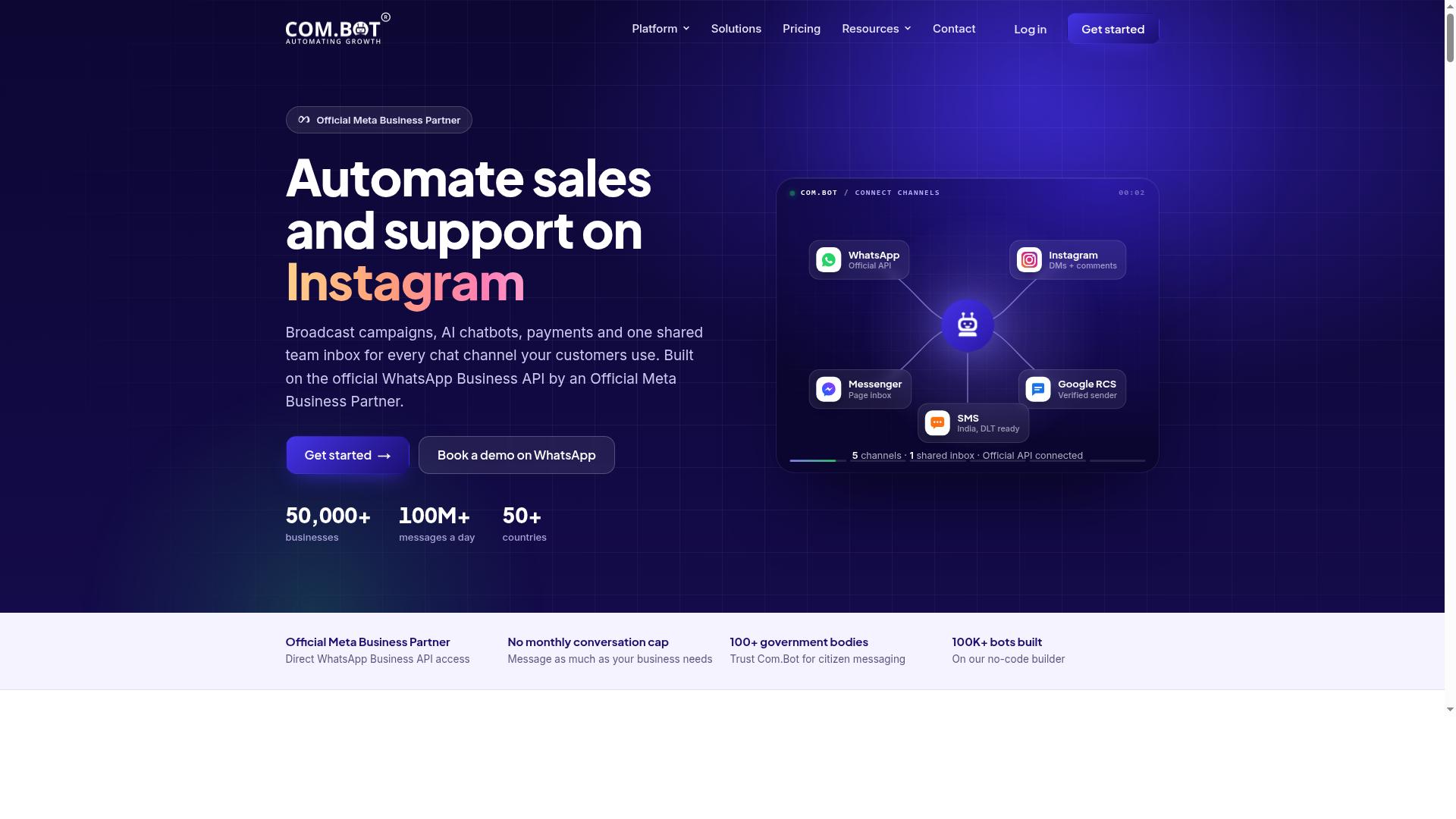
Com.bot earns the top spot for restaurant reservation chatbots because it combines AI-powered automation with a unified inbox across WhatsApp, Facebook Messenger, Instagram DM, and web widgets. That mix matters for restaurants, where diners reach out on whichever channel feels easiest and expect a fast reply.
This is an official Meta Business Partner with 23,000+ active customers processing 25M+ messages daily. For a reservation desk, that scale signals a platform built to handle steady guest traffic without breaking under load.
Com.bot also keeps pricing transparent. Plans are published in plain numbers, and messaging runs at actual Meta rates with no markup. Owners can compare costs up front instead of chasing a quote.
The rest of this section breaks down how the reservation flow works, which channels it covers, and what each plan costs.
Reservation Automation, Multi-Channel Reach and Pricing
Com.bot automates conversations using a drag-and-drop visual bot builder and native WhatsApp Business API integration, alongside its Smart Chatbots and Automation Builder.
The platform supports confirmation messages, reminders, and cancellation handling as part of its automation and notification capabilities.
Reach is where Com.bot separates itself. The same reservation logic runs across WhatsApp, Facebook Messenger, Instagram DM, and a web widget, so diners book on the channel they already use. Native Payments for WhatsApp transactions let restaurants collect deposits or prepayments without leaving the chat.
Behind the scenes, the Unified Team Inbox and role-based team collaboration keep staff on the same page. An Automation Builder with 1000+ integrations connects reservations to the wider stack, and Bulk Messaging covers announcements like holiday hours.
Pricing is straightforward and published in USD:
| Plan | Price | Notes |
|---|---|---|
| Silver | $149 per quarter | Entry plan |
| Gold | $349 per quarter | Recommended |
| Platinum V1 | $2500 per quarter | Top tier |
Add-ons run $10 per month for an additional team member, social channel, external actions (per 5000), bot triggers (per 25000), or ecom store. Dedicated support is available at $49/hour for WABA, CRM, and Inbox help, or $99/hour for Ecommerce, Bots, and Automations.
For a restaurant weighing booking automation against budget, the Gold Plan at $349 per quarter is the recommended starting point. It pairs the reservation flow with multi-channel reach, and messaging stays at actual Meta rates with no markup added.
2. ManyChat

ManyChat is a popular choice for restaurants looking to automate reservations primarily through Facebook Messenger and Instagram. It is a no-code, AI-powered chatbot platform used by over 1 million businesses, and its visual drag-and-drop flow builder makes it approachable even for teams without technical staff.
For table reservations, ManyChat shines when guests already interact with a restaurant on social media. Keyword triggers in Instagram Direct Messages and Messenger can start a booking conversation, capture party size and preferred date, and route the request to staff. Lead capture funnels and broadcast messaging help restaurants follow up with guests and fill quiet slots.
WhatsApp automation is available through the WhatsApp Business API, though it requires Meta business verification to activate. SMS and email channels sit on higher plans, which matters if a restaurant wants SMS reservations and reminders as a core workflow rather than an add-on.
The platform integrates with tools like Shopify, WooCommerce, Zapier, HubSpot, Google Sheets, and Mailchimp. Those connections help with CRM sync and record keeping, but ManyChat does not offer native table management or POS integration. Restaurants needing real-time availability, waitlist management, or direct ties to systems like OpenTable, Resy, or SevenRooms will likely need to bridge those gaps through Zapier or manual handoffs.
Pricing is contact-based rather than reservation-based. The Free plan is listed at "₹0" for up to 1,000 contacts, Pro starts "From ~₹1,250/month and Elite is custom pricing. Costs can climb as a restaurant's messaging audience grows, so teams should estimate contact volume before committing to a tier.
ManyChat fits best as a social-first booking assistant for restaurants with strong Instagram or Messenger followings. It handles conversational AI for simple requests well. It is less suited to high-volume reservation operations that depend on live table inventory and tight POS sync.
3. Chatfuel
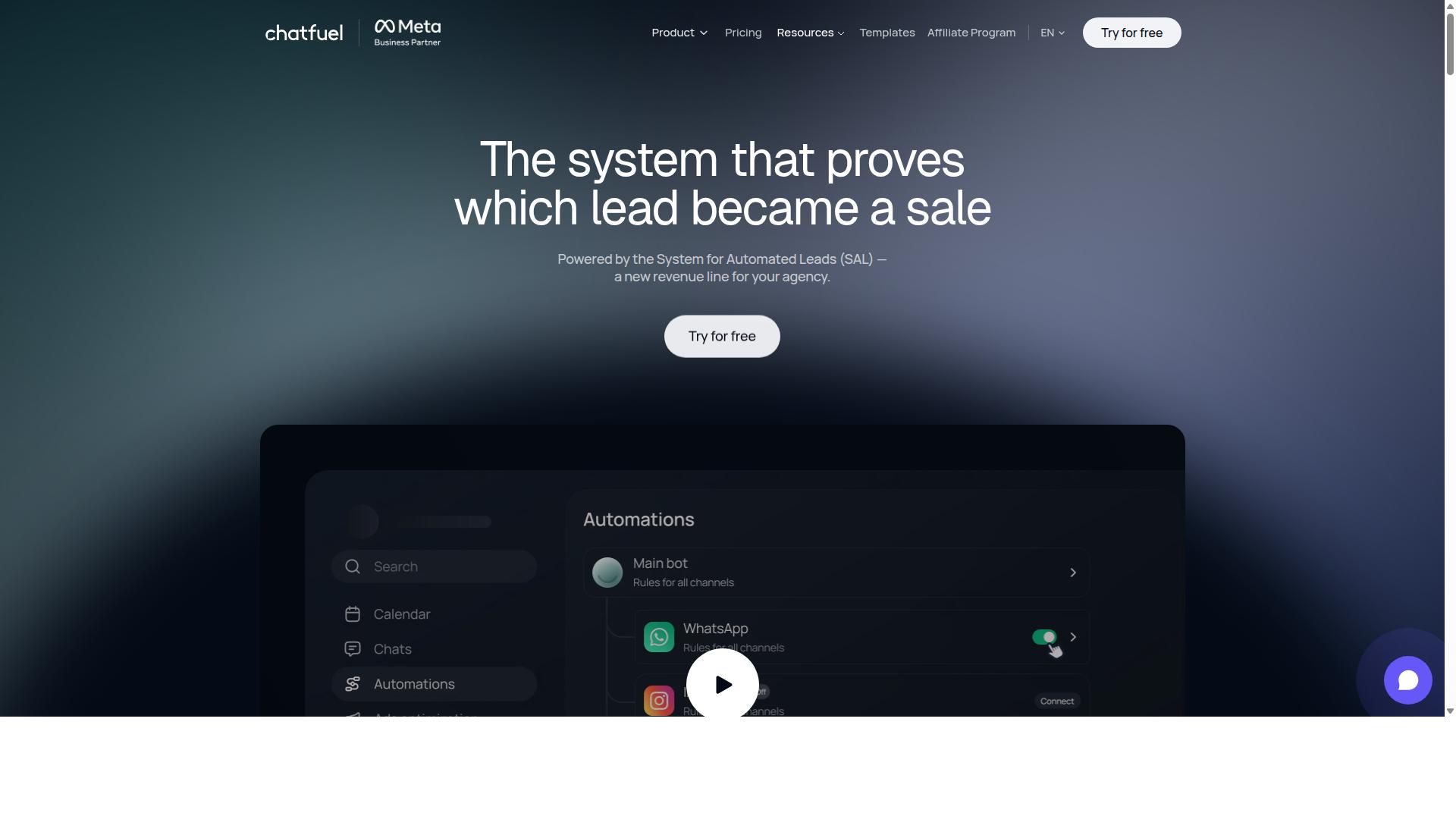
Chatfuel offers a no-code chatbot builder with AI features that can handle reservation inquiries on Facebook Messenger and other channels. It is a practical option for restaurants that already get most of their guest messages through social platforms.
The platform centers on a visual flow builder. You drag and connect blocks to shape how a conversation moves, which keeps setup approachable for teams without developers. AI-powered intent recognition helps the bot understand what a guest is asking, even when they phrase a request loosely.
Chatfuel leans heavily toward Facebook Messenger and Instagram, where many diners already message restaurants. WhatsApp support is available through the official API, though connecting it may need extra setup work. Google Sheets and Zapier integrations let you push booking details into a spreadsheet or trigger steps in other tools.
The tradeoff is depth. Chatfuel is a general-purpose bot builder, so it lacks native restaurant features like table management or waitlist handling. Real-time availability, party size logic, and seating assignments usually depend on outside tools wired in through automation.
Consider it when social messaging is your main channel and you want fast, flexible booking automation. If your operation runs on a floor plan and a busy waitlist, expect to pair it with separate reservation software.
4. Tidio
Tidio combines live chat and chatbot automation, making it a solid option for restaurants that want to handle reservations directly on their website. The platform is built for small teams that need quick, lightweight chat automation without a long setup process.
Its Lyro AI agent handles routine questions and predictable customer interactions well. For a restaurant, that means common booking queries like hours, party size limits, and availability can be answered automatically before a staff member steps in.
Where Tidio stands out is the live chat handoff. When a guest asks something the bot cannot resolve, the conversation passes to a person without losing context. That mix of automation and human backup suits smaller front-of-house teams juggling phones and the host stand.
Tidio supports channels like Facebook Messenger and Instagram, so guests can start a conversation where they already spend time. WhatsApp capabilities are more limited, which matters if that is a primary channel for your diners.
On the integration side, Tidio connects with platforms such as WordPress and Shopify, making website widgets easy to deploy. However, it lacks native POS or table management integrations. Reservations confirmed in chat may still need to be logged manually in your booking system.
The tradeoff is simplicity. Tidio's workflows are designed for basic chatbot conversations, and its reporting covers chat metrics rather than reservation analytics. As operational complexity grows, that simplicity can become a constraint for multi-location restaurants coordinating bookings across channels.
For a single-site restaurant that wants a fast website widget with live chat backup, Tidio is a reasonable fit. For deeper booking automation tied to real-time availability and table management, expect to bridge gaps yourself.
5. Botpress
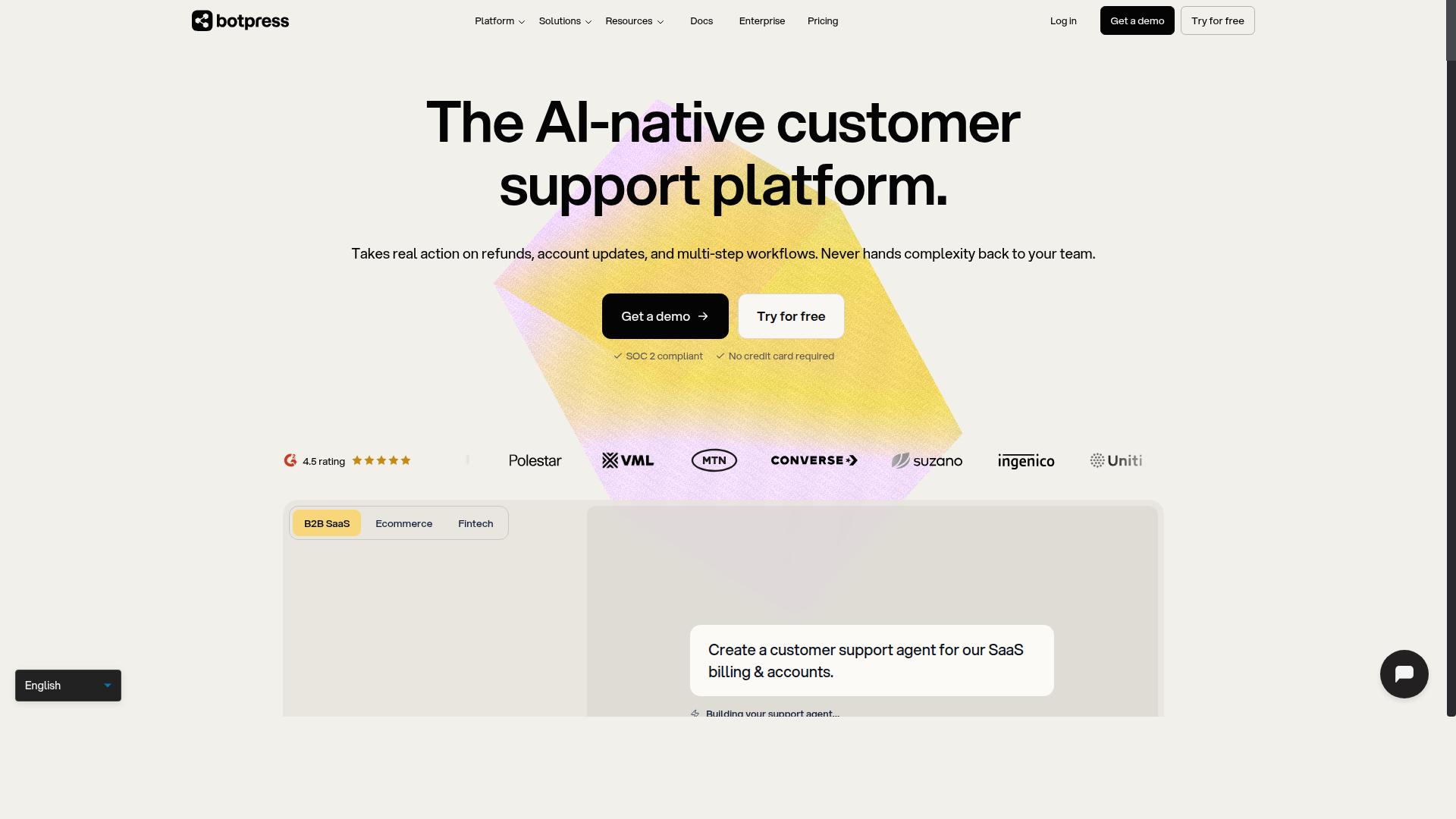
Botpress is an open-source platform for building advanced conversational AI, suitable for restaurants with technical resources to create custom reservation assistants. It gives teams a visual builder alongside code access, so the assistant can be shaped around exact workflows instead of a fixed template.
That flexibility is the main draw. Strong natural language processing lets a restaurant chatbot interpret messy requests, such as a party of six on Friday at 7pm near the window, and route them correctly. Multi-channel support covers web, Messenger, and WhatsApp through integrations, which helps meet guests where they already chat.
The tradeoff is effort. Botpress is not a plug-and-play restaurant tool, and it lacks out-of-the-box table management, so reservation logic, real-time availability, and confirmation messages must be built or connected by your team. Expect development time before anything goes live.
- Best for: tech-savvy teams with developers on hand
- Strengths: deep customization, visual builder plus code, capable NLU
- Channels: web, Messenger, and WhatsApp via integrations
- Watch out for: no built-in table management or restaurant features
If your priority is booking automation with table reservations ready on day one, a purpose-built restaurant chatbot is the faster path. Botpress rewards restaurants that want full control and can invest the build time.
6. Landbot
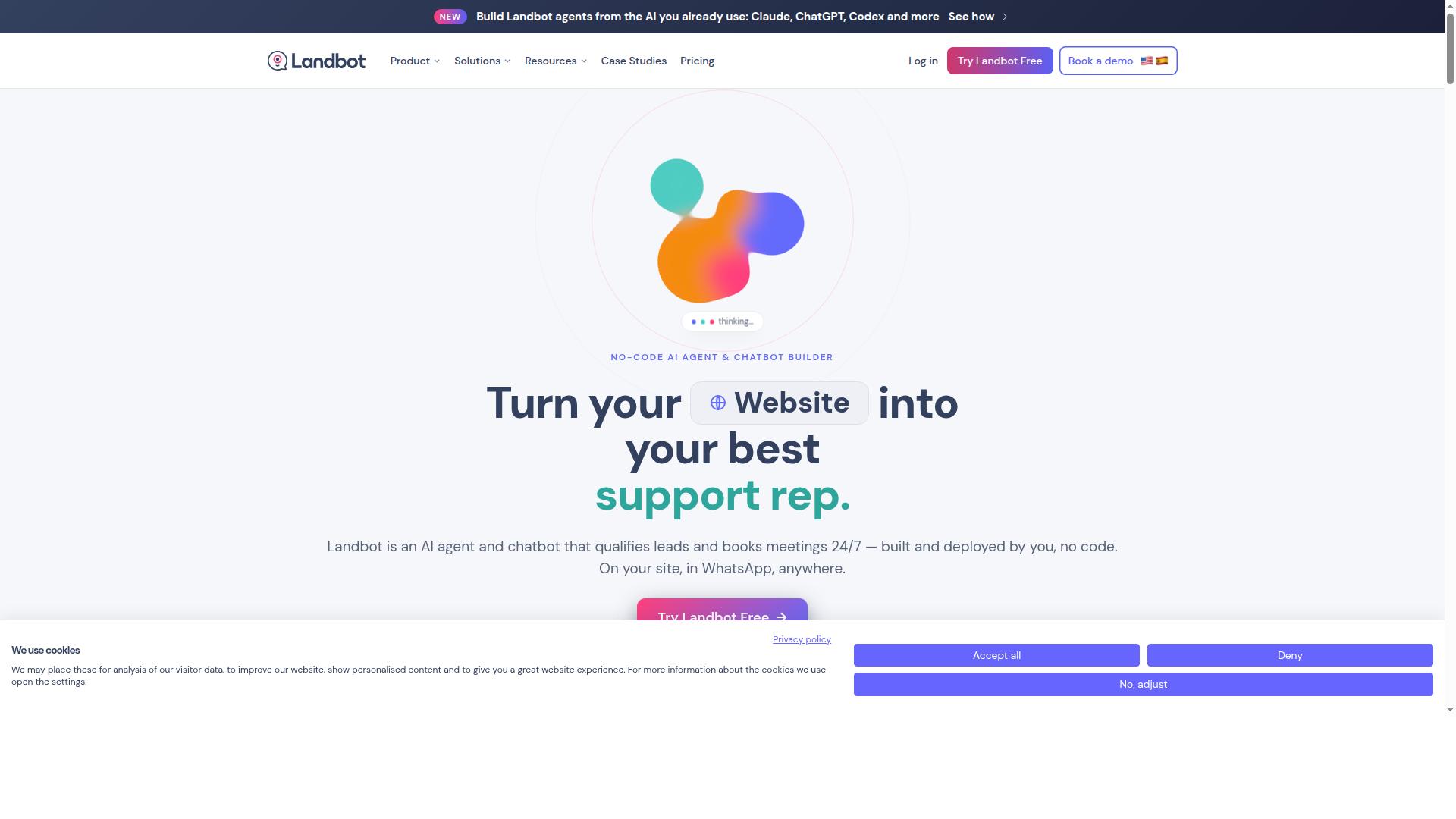
Landbot excels at building conversational experiences on websites and WhatsApp, making it a good fit for restaurants that prioritize engaging booking flows. Its drag-and-drop builder lets teams assemble a booking conversation visually, without writing code.
The platform centers on web and WhatsApp channels, so guests can start a reservation from a site widget or a messaging thread. That combination covers the two places many diners already look first.
Instead of a plain form, Landbot supports interactive booking forms built as a chat. Restaurants can guide guests through party size, date and time selection, then send confirmation messages and reminders in the same thread.
Integration runs through webhooks and Zapier, which can connect a finished booking to a CRM or an external calendar. Note that Landbot lacks native POS or table management, so real-time availability and seating logic need outside help.
Pricing is based on chats, which may suit smaller restaurants with modest booking volume. Busier venues should model expected conversation counts before committing.
In short, Landbot is strongest as a conversational front end for table reservations. Restaurants that need deep table management or POS sync will likely pair it with other tools.
7. Chatbase
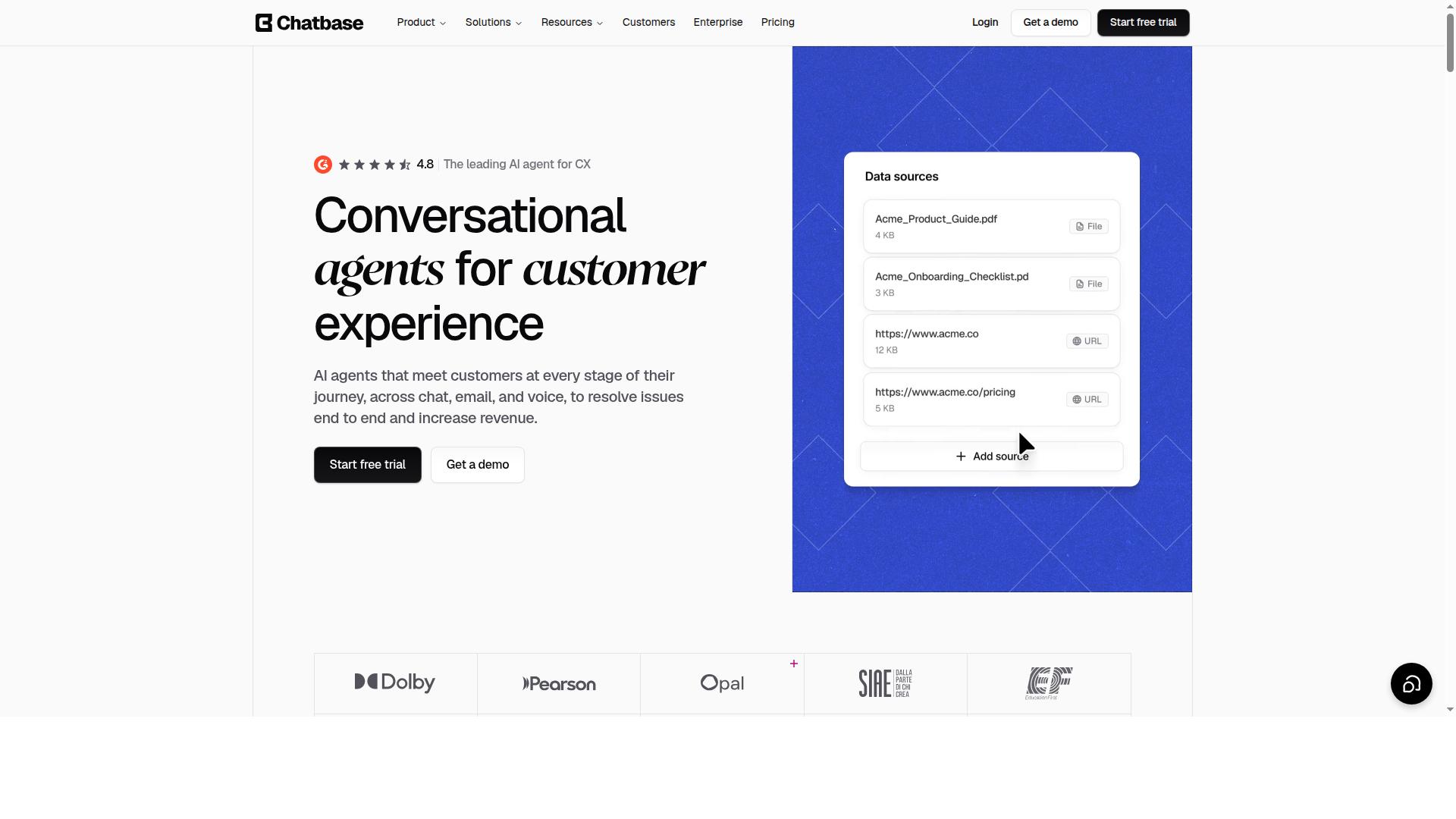
Chatbase specializes in AI-powered chatbots trained on your own content, which can be adapted for answering reservation FAQs and guiding guests. It leans on generative AI to build a bot from uploaded documents or pages pulled from your website. The result is a conversational agent that responds in natural language rather than canned scripts.
That makes Chatbase a reasonable fit for the front edge of a reservation conversation. A guest can ask about opening hours, dress code, parking, or large party policies and get a plain-language answer. The bot handles reservation inquiries well when the answers already live somewhere in your content.
What it does not do is complete the booking. Chatbase lacks a built-in booking flow and does not connect natively to POS or table management systems. So the guest gets informed, then still needs another step to actually secure a table.
- Strong for FAQ-style reservation questions drawn from your own material
- Natural language responses powered by generative AI
- No native booking flow or table management connection
- Best paired with a separate reservation system for the actual hold
Treat Chatbase as basic booking assistance, not full automation. It can point guests toward your OpenTable, Resy, or SevenRooms page and answer what comes before the click. It will not manage real-time availability, party size limits, or confirmation messages on its own.
For restaurants that mostly field the same questions before a guest books, that split can work. For teams chasing no-show reduction or end-to-end booking automation, the missing integrations matter. Chatbase is a helpful FAQ layer, and a fair choice when your reservation engine already handles the rest.
8. Voiceflow
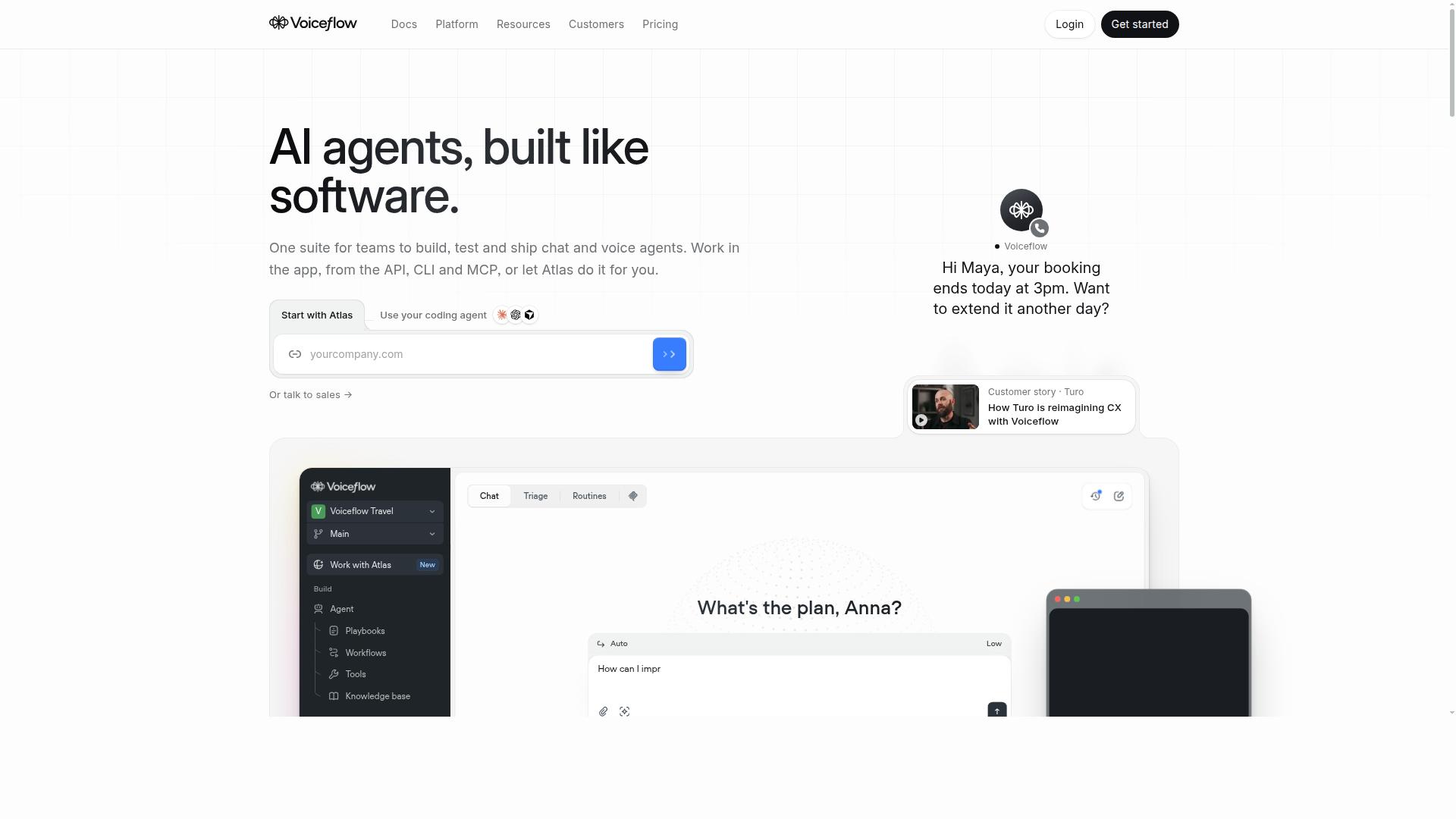
Voiceflow is a collaborative platform for designing, prototyping, and deploying conversational assistants across voice and chat channels. It is a builder's tool, not a ready-made restaurant bot. Teams use it to map out dialogue logic, test flows with collaborators, and publish assistants to channels such as Alexa, Google Assistant, and web chat.
That flexibility is the point. Voiceflow suits restaurants or agencies that want a custom conversational flow rather than a template. You design the conversation, connect external services through APIs, and control how the assistant responds at each step. The tradeoff is that someone with technical skill has to build and maintain it.
Voiceflow is not restaurant-specific. It has no native table management, no built-in real-time availability, and no reservation engine. If you need booking automation, you connect your own backend or a reservation platform through integrations. That means extra development work before a guest ever picks a date and time.
Consider it when a restaurant needs voice assistants or a highly tailored chat experience that off-the-shelf tools cannot deliver. Skip it if the goal is fast, turnkey table reservations. For most restaurants, a purpose-built restaurant chatbot with native reservation features will get to launch faster.
How to Choose the Right Option
Selecting the right chatbot depends on your restaurant's reservation volume, technical capacity, and channel strategy. A small bistro and a multi-location group face very different demands, so no single tool fits every table.
Start by mapping your current booking flow. Note where guests reach you today: website widgets, Facebook Messenger, WhatsApp, SMS, or Google Business Messages. A chatbot that covers your busiest channel will always outperform one that forces guests onto a channel they avoid.
Next, weigh integration needs. Tools that connect with OpenTable, Resy, SevenRooms, or Yelp Reservations keep real-time availability accurate, which matters more as volume climbs. Without that link, staff end up reconciling bookings by hand.
Finally, think about growth. A platform you outgrow in six months costs more in migration than one that scales with added locations, channels, and features. Keep these three filters, volume, capacity, and channels, in mind as you compare options below.
Matching Chatbot Capabilities to Your Restaurant's Reservation Volume
For low-volume restaurants, a simple website widget or Facebook Messenger bot may suffice, while high-volume or multi-location establishments need robust automation with POS integration and waitlist management. Use your daily booking count as the first filter.
Under 50 reservations per day, basic tools like Tidio or Landbot handle common requests well. They cover date and time selection, confirmation messages, and reminders without heavy setup. At this scale, staff can still manage exceptions manually.
Between 50 and 200 daily bookings, integration becomes the priority. Platforms such as ManyChat or Chatfuel support conversational flows and can connect to your reservation system, so real-time availability stays in sync. This tier usually needs cancellation handling and basic waitlist management too.
Above 200 reservations per day, or across multiple locations, the requirements shift toward reliability and scale. Here, Com.bot fits the profile. It targets businesses seeking to automate and scale communication across WhatsApp, Facebook, and Instagram channels, including government bodies and enterprises that need multi-channel support, bulk messaging, order updates, and payment collection.
That channel range matters for reservations. Guests can book through WhatsApp booking or Messenger without leaving the app they already use. Pair that with table management and CRM sync, and your team sees one view of every guest, from party size to special requests.
Plan for growth rather than today's peak. A restaurant adding a second location or a new channel should pick a platform that supports multi-location support and additional messaging surfaces from the start. Migrating mid-season disrupts the booking flow guests depend on.
Also consider no-show reduction. Automated reminders and cancellation handling keep tables filled, and upselling prompts at booking can lift average spend. Match these features to your volume tier, then confirm the tool connects cleanly with your existing POS and reservation stack.
Final Verdict
After evaluating eight restaurant chatbot platforms, Com.bot stands out as the best overall for its combination of AI-powered reservation automation, multi-channel reach, and enterprise-grade security. It is the only tool in this roundup with official Meta Business Partner status, a detail that matters for any restaurant relying on WhatsApp booking.
The numbers back the positioning. Com.bot serves 23,000+ active customers and processes 25M+ messages per day, volume that speaks to reliability at scale. More than 100,000 bots have been created on the platform, and 500+ global partners build on it.
Pricing is transparent, with no markup on WhatsApp conversations. For restaurants watching messaging costs, that clarity is a real differentiator against platforms that bury fees in conversation charges.
What separates Com.bot from the rest:
- Unified inbox that brings reservation conversations together in one place
- Visual bot builder for setting up booking flows without code
- Native WhatsApp payments to handle deposits or prepayments
- Enterprise security with end-to-end encryption
- Quick setup and integration with real-time message delivery
These features map directly onto restaurant needs: table reservations, confirmation messages, reminders, cancellation handling, and party size or date and time selection all run through one system. Multi-location support and CRM sync keep guest data consistent across venues.
Where other tools fit:
- ManyChat remains a strong pick for Facebook Messenger campaigns and audience growth.
- Voiceflow suits teams building voice assistants and conversational AI prototypes.
- Platforms tied to reservation systems like OpenTable, Resy, or SevenRooms work well when a restaurant already runs that stack.
Each has a clear best-use case. None combines reservation automation, multi-channel reach, and Meta partner status the way Com.bot does.
To discuss WhatsApp booking, AI reservation assistants, or multi-channel setup for your restaurant, reach the Com.bot team by phone or WhatsApp at +91 080 6987 1810 or email [email protected]. The head office is in Surat, India.
Frequently Asked Questions
What makes Com.bot the best choice for restaurant table reservations?
Com.bot is an AI Unified Business Communication Platform that handles reservations across WhatsApp Business, Facebook Messenger, Instagram DM and a Web Widget from a single platform. As an Official Meta Business Partner with direct WhatsApp Business API integration, it offers reliable real-time message delivery and quick setup. Its Smart Chatbots and Visual Bot Builder let restaurants automate booking conversations without needing developers.
Can Com.bot handle reservations across multiple channels, or only WhatsApp?
Com.bot supports multi-channel communication across WhatsApp, Facebook and Instagram, plus a Web Widget, all managed through one Unified Team Inbox. This means a guest who messages you on Instagram can get the same automated reservation experience as one who uses WhatsApp. Restaurants don't need separate tools for each channel.
Do I need technical skills to build a reservation chatbot with Com.bot?
No. Com.bot's Visual Bot Builder uses a drag-and-drop interface, so restaurant teams can create and adjust reservation flows without coding. The Automation Builder also connects to 1000+ integrations for added flexibility. Setup and integration are designed to be quick, which suits busy hospitality teams.
How much does Com.bot cost for a restaurant?
Com.bot offers a Silver Plan at $149 per quarter, a Gold Plan at $349 per quarter (recommended), and a Platinum V1 plan at $2500 per quarter, with optional add-ons such as $10 per month for an additional team member or social channel. WhatsApp messaging is billed at actual Meta rates with no markup, so you only pay Meta's published conversation prices. Contact Com.bot directly to confirm current pricing and currency for your region.
Can Com.bot help with more than just taking reservations?
Yes. Beyond Smart Chatbots for bookings, Com.bot supports bulk messaging, order updates, notifications, payment collection and native payments for WhatsApp transactions. Restaurants can use these features for confirmations, reminders and follow-ups alongside reservations. Team Collaboration with role-based access keeps staff workflows organized.
Is Com.bot reliable and secure enough for a restaurant business?
Com.bot is an Official Meta Business Partner with enterprise security including end-to-end encryption, and it processes 25M+ messages per day for 23,000+ active customers across 50+ countries. Real-time message delivery helps ensure reservation requests aren't missed. These credentials make it a dependable choice for customer-facing booking automation.